


The Science of Warm Spices — and Why Your Body Craves Them in Winter
- Junnie Lai

- Jan 17
- 5 min read

As the weather turns crisp and the days grow shorter, warm spices begin to take center stage. From apple pie spice and pumpkin spice to fragrant blends like Baharat and Garam Masala, these cozy aromatics suddenly appear in everything—lattes, baked goods, roasted vegetables, and hearty stews.
Why are warm spices so irresistible during the colder months? And how do they affect our bodies, especially when the season itself is naturally dry?
This guide explores the culinary, cultural, and wellness energetics behind warm spices—and offers guidance on when to enjoy them freely and when to use them in moderation.
The Seasonal Appeal of Warm Spices
1. They Physically Warm the Body
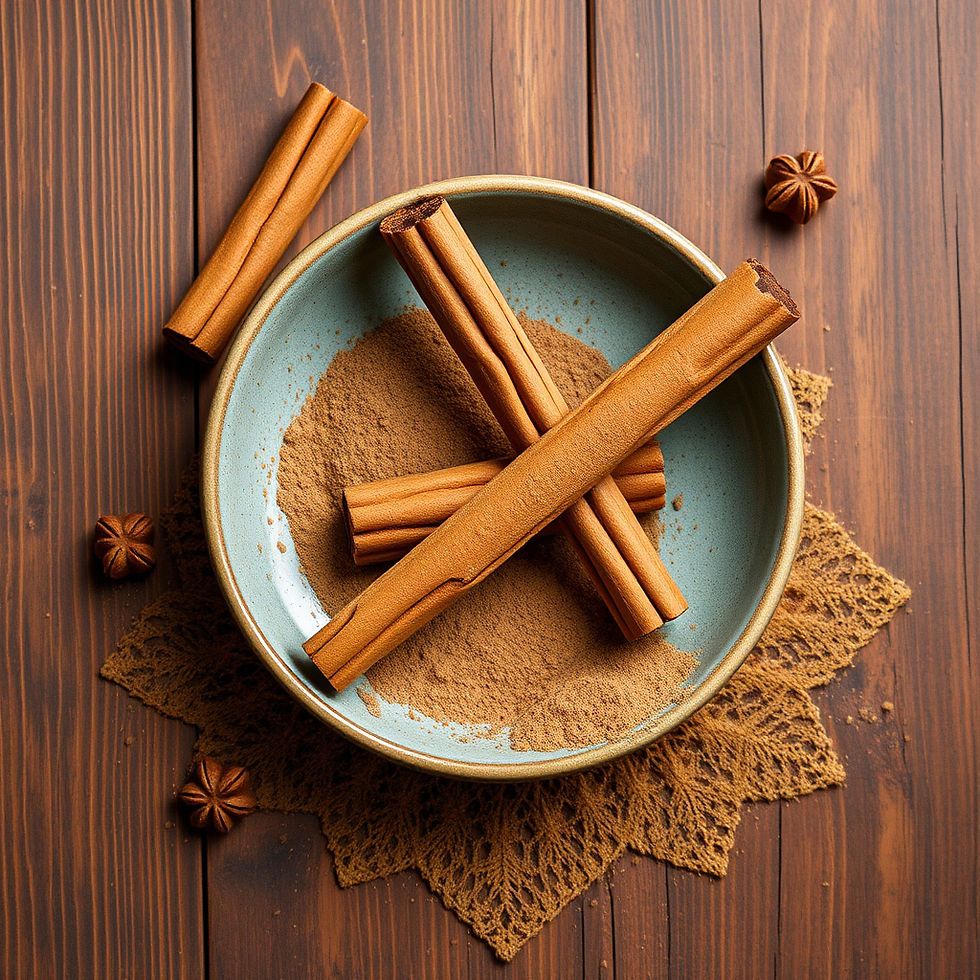
Many warm spices—such as cinnamon, ginger, nutmeg, clove, and black pepper—have natural thermogenic properties. They gently increase circulation, stimulate digestion, and help us feel more comfortable during colder days.
2. They Boost Mood and Emotional Comfort
Warm spices evoke nostalgia, celebration, and togetherness. Their aromas stimulate the limbic system, promoting:
Calm
Comfort
Emotional grounding
A feeling of warmth and safety
This is why the scent of pumpkin spice or spiced chai can feel like a seasonal hug.
3. They Pair Perfectly With Seasonal Foods
Fall and winter foods are often grounding and hearty:
Root vegetables
Squashes
Baked fruits
Stews and soups
Warm spices enhance these flavors beautifully, creating a sense of seasonal harmony.
Savory Warm Spice Blends Worth Exploring
Warm spices aren’t just for sweet treats. Many global cuisines use aromatic spice blends that deliver depth and warmth in savory dishes:
• Baharat (Middle Eastern)
A rich blend with cinnamon, nutmeg, cardamom, cumin, coriander, and black pepper. Ideal for meats, legumes, and roasted vegetables.
• Garam Masala (Indian)
Literally meaning “warming spices,” this blend often includes cinnamon, cloves, coriander, cumin, and cardamom.
• Advieh (Persian)
A gentle, floral mix with cinnamon, nutmeg, cardamom, and rose petals.
• Chinese Five-Spice
A balanced blend of cinnamon (cassia), star anise, fennel, clove, and Sichuan peppercorn.
• Ras el Hanout (North African)
A complex blend that may include cinnamon, ginger, nutmeg, turmeric, and more.
These blends add depth, aroma, and warmth to savory dishes—especially during colder months.
Benefits of Warm Spices in the Cold Season

1. Support Digestion & Metabolism
Warm spices stimulate digestive fire and help with:
Bloating
Sluggish digestion
Low appetite
Post-meal fatigue
2. Improve Circulation
They gently warm the body from within—helping those who feel cold easily or have cold hands and feet.
3. Strengthen Immunity
Spices like cinnamon, ginger, clove, and cardamom have natural antimicrobial and antioxidant properties.
4. Lift Mood & Ease Winter Blues
Their cozy aromatics support emotional balance during months with less sunlight.
But There's a Downside: Too Many Warm Spices Can Cause Dryness
Winter is already a cold-dry season, and warm spices—especially pungent or aromatic ones—can also have drying qualities.
Excess consumption may lead to:
Dry throat
Dry skin or lips
Constipation
Overheating internally
Irritability or restlessness
Night sweats (especially in Yin Deficiency)
In Traditional Chinese Medicine, warm spices are “warming and dispersing.” While excellent for cold stagnation, they can consume Yin and body fluids when overused.
Who Should Use Warm Spices Sparingly?
1. Yin Deficiency Types
Signs include:
Dry skin
Night sweats
Hot flashes
Irritability
Thirst in the evening
Warm spices may worsen dryness and internal heat.
2. Heat or Fire Body Types
These individuals naturally run warm:
Red face or warm complexion
Intense appetite
Tendency toward irritability
Thirst or acid reflux
For them, warm spices can increase heat.
3. People Prone to Dryness
Especially during winter:
Dry cough
Cracked lips
Dry sinuses
Constipation
Warm spices may aggravate these symptoms unless balanced with moistening foods.
4. Those With Sensitive Stomachs
Excessive cinnamon, cloves, black pepper, or ginger may cause discomfort.
Who Benefits the Most From Warm Spices?
1. Qi Deficiency Types
These individuals often feel:
Sluggish
Cold
Low energy
Poor appetite
Warm spices help activate digestion, circulation, and energy flow.
2. Yang Deficiency Types
Signs include:
Feeling cold all the time
Cold limbs
Slower metabolism
Fluid retention
Warm spices help strengthen Yang and improve warmth.
3. Phlegm-Damp Types (in moderation)
Warm spices can help move Qi, dry dampness, and improve heaviness—when used appropriately.
How to Balance Warm Spices in Winter
To enjoy their benefits without creating dryness:
Pair warm spices with moistening foods like pears, apples, dates, jujube, almonds, or honey.
Drink plenty of warm fluids.
Don’t include warming spices in every meal.
Rotate with neutral spices like fennel, coriander, cumin, and turmeric.
Add healthy fats to preparations (ghee, olive oil, nut butters) to counter dryness.
Finding Your Seasonal Balance
Warm spices are beloved during the cold season for good reason—they comfort us, warm us, and uplift us. But like all ingredients, balance is essential.
Enjoy your pumpkin spices, chai blends, Baharat, and Garam Masala as part of your winter ritual.Just listen to your body. If you tend toward heat or dryness, go lightly. If you feel cold, sluggish, or low in energy, warm spices may be your perfect winter ally.
Disclaimer
This article is intended for educational and lifestyle purposes only.It is not intended to diagnose, treat, or cure any medical condition.Individuals with specific health concerns should consult a licensed healthcare provider before making changes to exercise or wellness practices.
References
Traditional Chinese Medicine & Seasonal Energetics
Maciocia, G. (2015). The foundations of Chinese medicine: A comprehensive text for acupuncturists and herbalists (3rd ed.). Elsevier.
Ni, M. (1995). The Yellow Emperor’s Classic of Medicine: A new translation of the Neijing Suwen with commentary. Shambhala Publications.
Wiseman, N., & Ellis, A. (1996). Fundamentals of Chinese medicine: Zhong yi xue ji chu. Paradigm Publications.
Bensky, D., Clavey, S., & Stöger, E. (2004). Chinese herbal medicine: Materia medica (3rd ed.). Eastland Press.
Warm Spices, Thermogenesis & Digestion
Al-Numair, K. S., Ahmed, S. E., & Al-Assaf, A. H. (2007). Effect of cinnamon consumption on blood glucose and lipid profiles in humans. Pakistan Journal of Nutrition, 6(3), 256–258.
Platel, K., & Srinivasan, K. (2004). Digestive stimulant action of spices: A myth or reality? Indian Journal of Medical Research, 119, 167–179.
Srinivasan, K. (2005). Role of spices beyond food flavoring: Nutraceuticals with multiple health effects. Food Reviews International, 21(2), 167–188. https://doi.org/10.1081/FRI-200051872
Circulation, Immunity & Antioxidant Effects
Aggarwal, B. B., & Harikumar, K. B. (2009). Potential therapeutic effects of curcumin, the anti-inflammatory agent, against neurodegenerative, cardiovascular, pulmonary, metabolic, autoimmune, and neoplastic diseases. The International Journal of Biochemistry & Cell Biology, 41(1), 40–59.
Ranasinghe, P., Pigera, S., Premakumara, G. A. S., Galappaththy, P., Constantine, G. R., & Katulanda, P. (2013). Medicinal properties of “true” cinnamon (Cinnamomum zeylanicum): A systematic review. BMC Complementary and Alternative Medicine, 13, 275. https://doi.org/10.1186/1472-6882-13-275
Dryness, Heat, and Yin Consumption (TCM + Physiology)
Kaptchuk, T. J. (2000). The web that has no weaver: Understanding Chinese medicine (2nd ed.). McGraw-Hill.
Pitchford, P. (2002). Healing with whole foods: Asian traditions and modern nutrition (3rd ed.). North Atlantic Books.
Chen, J., & Chen, T. (2004). Chinese medical herbology and pharmacology. Art of Medicine Press.
Aromatics, Mood & Sensory Effects
Herz, R. S. (2009). Aromatherapy facts and fictions: A scientific analysis of olfactory effects on mood, physiology and behavior. International Journal of Neuroscience, 119(2), 263–290. https://doi.org/10.1080/00207450802333953
Spence, C. (2020). Multisensory flavour perception and the role of the environment. Food Quality and Preference, 83, 103899. https://doi.org/10.1016/j.foodqual.2020.103899


Comments